

When Life Gets Interrupted: 8 Ways to Protect Your Health Before an Emergency
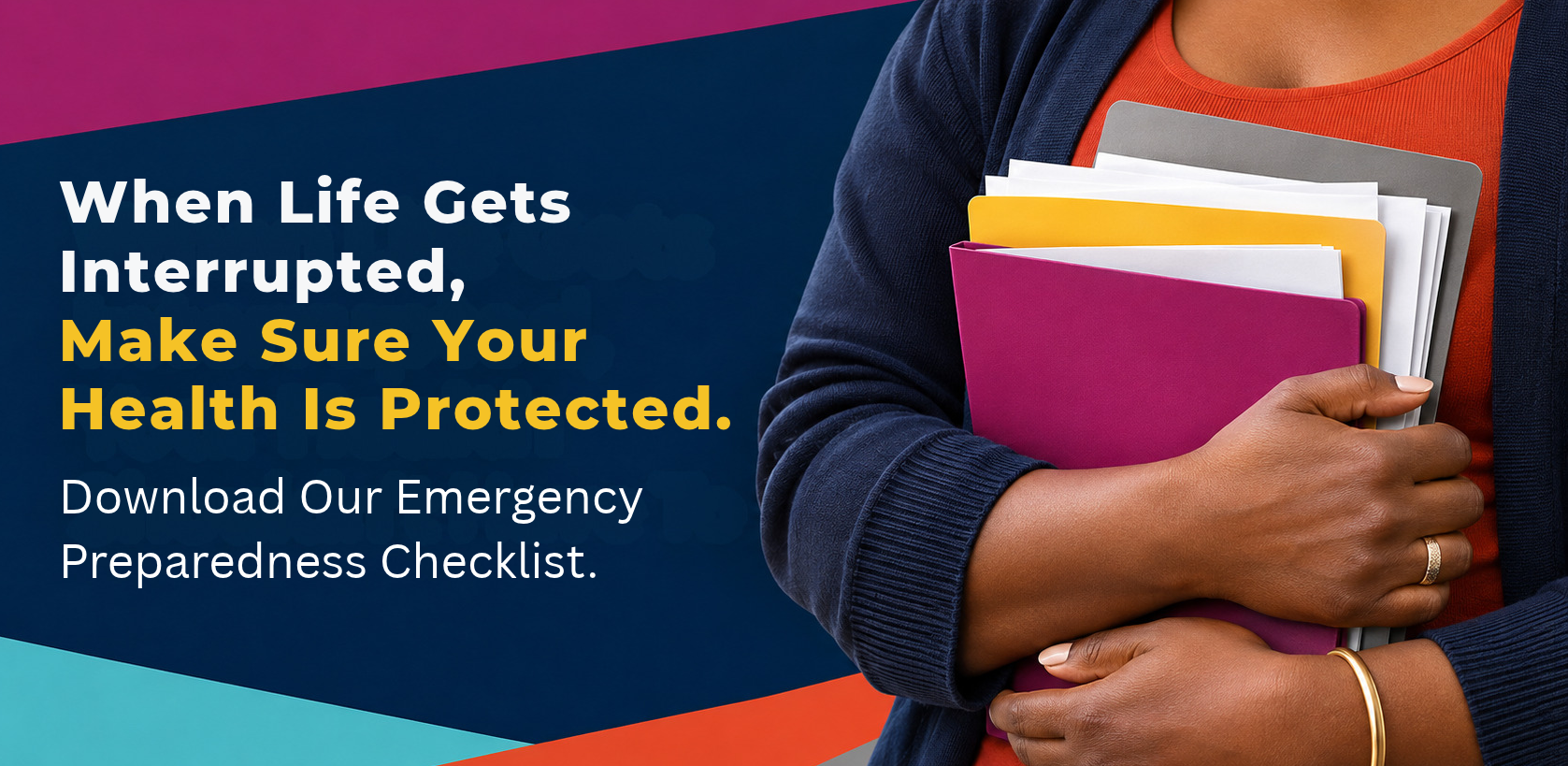
From medication refills to medical records, here’s how to make sure you and your loved ones are prepared when the unexpected happens.
One minute, everything is working. The next, the power is out, your internet isn’t connecting, or an unexpected emergency has disrupted your everyday routine.
We’re used to thinking about emergency preparedness in terms of flashlights, bottled water, batteries, and canned goods. And while those things matter, there’s another kind of preparedness that deserves just as much attention: your health.
Think about it.
What happens if you need a prescription refill and your pharmacy is closed? What if you’re caring for an aging parent and can’t access their medical records? Or what if a power outage affects medication that needs refrigeration? For millions of people managing chronic conditions, relying on essential medical equipment, or caring for family members, these aren’t small inconveniences. They can become serious health concerns. And for Black women, who are often managing their own health while also supporting the needs of children, partners, parents, and other loved ones, being prepared can be especially important. The good news is that you don’t need an expensive emergency kit or an elaborate plan to get started.
You need information, a little organization, and a plan that works for your life. DOWNLOAD THE EMERGENCY PREPAREDNESS CHECKLIST
1. Get Your Health Documents Together
If you had to leave home quickly or access medical care somewhere unfamiliar, would you know where to find your important information?
Start by creating a health emergency folder for yourself and anyone whose care you help manage.
Include:
- Health insurance cards and policy information
- Photo identification
- A list of healthcare providers and their phone numbers
- Current medications, dosages, and allergies
- Relevant medical conditions and treatment information
- Emergency contacts
- Advance directives or healthcare power of attorney documents, when applicable
Keep paper copies in a waterproof, portable folder and secure digital copies in an encrypted location you can access when needed.
Make sure at least one trusted person knows where to find essential information.
Your health information should be accessible when you need it most, even when your phone or internet isn’t working.
2. Don’t Wait Until You’re Out of Medication
For someone living with diabetes, hypertension, asthma, or another chronic condition, missing medication can have serious consequences.
Take a few minutes to review your prescriptions.
Are they current? Do you have enough medication to get through a temporary disruption? Are your refills due soon? Does your pharmacy offer automatic refills or prescription delivery?
Ask your pharmacist whether you qualify for an emergency refill or an additional supply under your insurance plan and state law.
If your medication requires refrigeration, ask how long it can safely remain at room temperature and what you should do if the power goes out. Instructions vary by medication, so don’t guess.
And never change your dosage or stop taking a prescribed medication simply because an emergency has interrupted your routine. Contact a healthcare professional for guidance.
3. Make a Plan for Medical Equipment That Needs Power
A power outage can be much more than an inconvenience when someone depends on electricity-powered medical equipment.
That might include oxygen equipment, certain respiratory devices, home dialysis equipment, or powered mobility aids.
If you or someone in your household uses medical equipment, develop a backup plan before an outage occurs.
Talk with your equipment supplier or healthcare provider about battery life, backup power options, and what to do if equipment becomes unavailable.
You can also contact your electric utility about any medical needs registry or notification program it offers. Registration does not guarantee uninterrupted power or faster restoration, so an independent backup plan is still essential.
Know when it would be safer to relocate to a facility or location with reliable electricity.
4. Create a Family Health Contact List
We’ve become so accustomed to keeping everything in our phones that many of us don’t even remember important phone numbers anymore.
But what happens when your battery dies or you can’t access your contacts?
Write down the numbers for your doctors, pharmacy, insurance company, emergency contacts, and nearby urgent care facilities.
If you’re caring for a parent or loved one, include their providers and the people authorized to make healthcare decisions on their behalf.
Have a conversation with family members about who will check on whom during an emergency.
You don’t have to manage everything yourself. A plan works best when everyone knows their role.
5. Prepare for More Than a Power Outage
Emergencies don’t always arrive with storm warnings.
Sometimes the interruption is digital.
Internet outages, software failures, and other technology disruptions can interfere with communication, scheduling, payments, and access to important information.
Prepare for the possibility that the technology you depend on may not be available.
Keep printed copies of essential information, have an alternative way to contact family members, and know where you can seek care if your usual provider or pharmacy is temporarily inaccessible.
Avoid relying exclusively on information stored in an email account, patient portal, or app.
Technology is convenient. But when it comes to your health, having a backup is simply smart.
6. Build a Health-Focused Emergency Kit
Traditional emergency kits are important, but consider adding supplies specific to your health needs.
In addition to water, nonperishable food, flashlights, batteries, a first-aid kit, and a portable phone charger, consider including:
- Essential medical supplies
- Copies of prescriptions and insurance information
- Backup eyeglasses or contact lens supplies
- Menstrual products and personal hygiene items
- Infant feeding supplies, if needed
- Supplies for managing blood glucose or other chronic conditions
- Items needed for mobility or disability-related support
Review your kit periodically to replace expired supplies.
And remember that generators, grills, and fuel-burning camping equipment must never be used indoors or in enclosed spaces. Carbon monoxide poisoning is a potentially deadly risk during power outages.
The most useful emergency kit is one designed around the actual needs of your household.
7. Make Sure Your Health Coverage Is Ready, Too
Emergency preparedness isn’t just about surviving a storm or getting through an outage.
It’s also about being able to access healthcare when you need it.
As 2027 approaches, changes to Medicaid, Medicare, and Affordable Care Act Marketplace coverage could affect eligibility, enrollment, and costs for some individuals and families.
Now is a good time to review your insurance information.
Make sure your coverage is active, your contact information is current, and you understand any upcoming renewal deadlines.
Check whether your doctors and prescriptions will remain covered and whether your costs may change.
The Black Women’s Health Imperative has developed an interactive resource, Staying Covered in 2027, to help individuals and families understand important coverage changes and take action.
Visit https://stayingcovered.bwhi.org to explore the toolkit.
Because having your medical information organized is important, but so is making sure you can afford and access the care you need.
8. Check on Someone Else
Preparedness isn’t just an individual responsibility. It’s something we can do for one another.
Think about the people in your life who might need extra support during an emergency.
An older relative who lives alone. A neighbor with limited mobility. A friend managing a serious health condition. A parent caring for young children.
Ask whether they have access to medications, important documents, emergency contacts, and transportation if they need medical attention.
Sometimes the most powerful emergency resource isn’t something you can buy.
It’s having someone who checks on you.
Preparedness Is an Act of Self-Care
We can’t control every storm, outage, or unexpected disruption. But we can take steps today that help protect our health tomorrow.
Start small.
Find your insurance card. Check your prescription refills. Write down your doctor’s phone number. Have that conversation with your family.
You don’t have to do everything in one day.
Being prepared isn’t about expecting the worst. It’s about making sure you’re ready to protect what matters most.
And your health is always worth protecting.