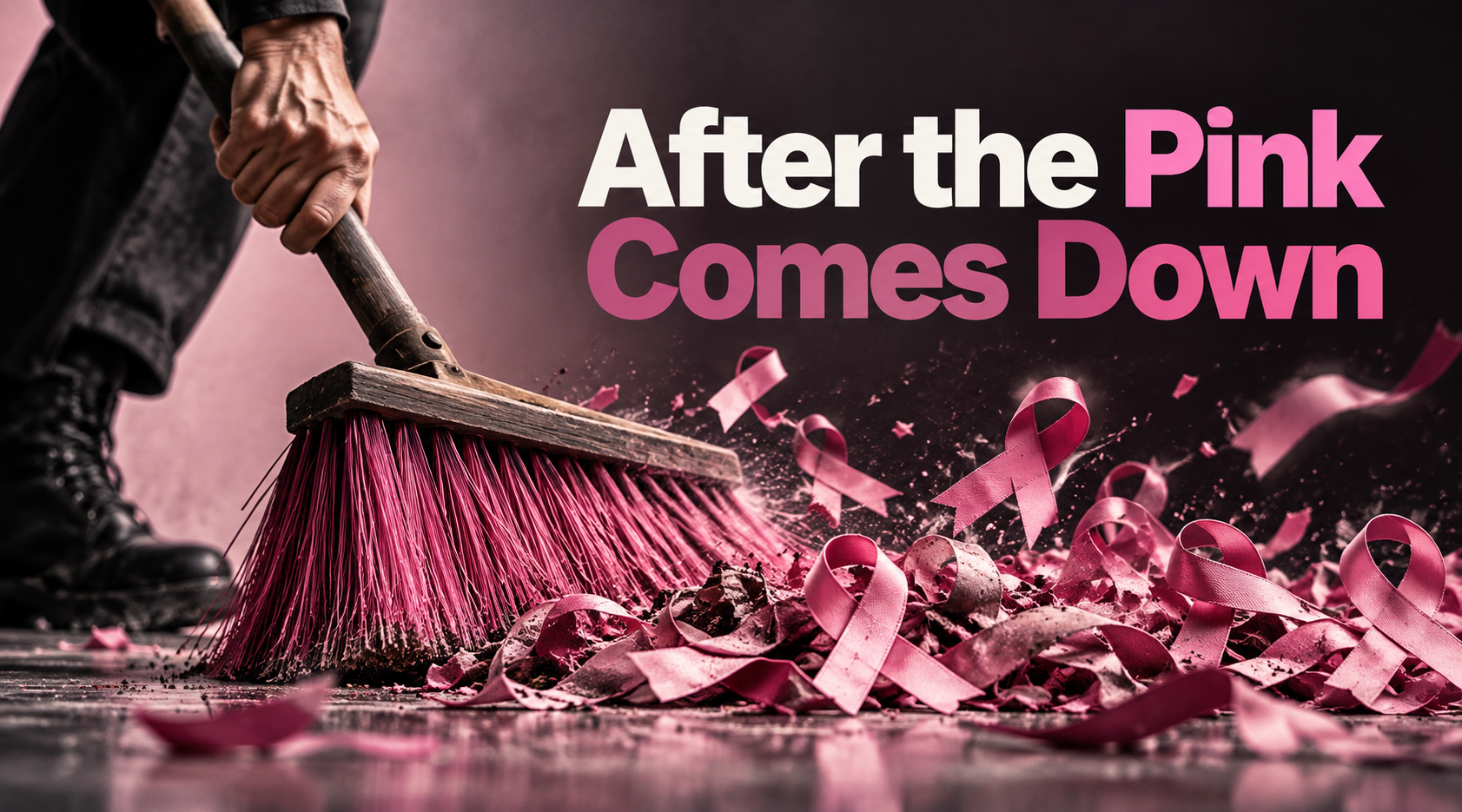
After the Pink Comes Down
Black women need more than a month of awareness, and the work doesn’t stop when October ends.
Every October, the world turns pink. Ribbons show up on everything from sneakers to cereal boxes, and our feeds fill up with reminders to get a mammogram and know our family history. Then November comes and the headlines move on.
But breast cancer doesn’t run on a marketing calendar, and neither does the woman sitting with a new diagnosis, wondering whether the healthcare system will give her the same shot at survival as everyone else.
At the Black Women’s Health Imperative (BWHI), we’ve spent more than four decades fighting for the health of Black women and girls. Breast cancer has taught us that awareness can open the conversation, but it can’t save a life on its own. What saves lives is catching cancer early and getting treatment on time, and policy has a lot to say about whether that happens.
Black Women Know the Stakes
Breast cancer is one of the most common cancers among women in the United States, but its toll isn’t shared equally.
According to the American Cancer Society, Black women have the highest breast cancer death rate of any racial or ethnic group, even though White women are slightly more likely to develop the disease. Black women are also more likely to be diagnosed with aggressive forms of breast cancer, including triple-negative breast cancer, which can be harder to treat.
Those numbers show up in real lives as delayed diagnoses, specialists who are hard to reach, medical bills that pile up, and exam rooms where women’s concerns get waved away.
None of that is a personal failing. It’s what happens when the systems meant to protect our lives fall short, and no amount of pink merchandise is going to fix it.
Knowing What to Do Isn’t Always Enough
A new survey released by the American Cancer Society on October 1, 2026, offers another reason to rethink how we approach breast cancer awareness.
The survey reached about 33,000 women taking part in the Society’s Cancer Prevention Study-3 and asked what they know about breast cancer risk factors and whether that knowledge shows up in their daily lives.
What they found was a real gap between knowing and doing. While 91% of respondents knew that low levels of physical activity raise cancer risk, only 27% met the American Cancer Society’s physical activity recommendations. And while 85% understood that alcohol increases breast cancer risk, 69% reported drinking to some extent.
One thing to keep in mind is that these women were already part of a long-term health study, so they may be more health-aware than most. Their answers don’t necessarily reflect all U.S. women, or Black women in particular.
Those everyday habits do matter. Staying active and cutting back on alcohol can help lower breast cancer risk, even though no lifestyle change can erase it completely.
But knowing the risks is one thing, and living your life around them is another. Think about a woman who knows she needs to move more but doesn’t feel safe walking in her neighborhood, or one who’s working two jobs and caring for family with barely a minute to herself. When fresh food is hard to find and a checkup feels like one more bill, a list of healthy habits can feel out of reach.
So instead of another lecture, what women need is real support and communities where the healthy choice is also the realistic one.
We Fought for Screening Access Before It Became a Talking Point
BWHI’s breast cancer advocacy didn’t start with a hashtag. Years ago, when proposed federal screening recommendations threatened routine mammograms for women starting at age 40, we helped lead the fight to protect that access.
BWHI was a leader in developing and passing the Protecting Access to Lifesaving Screenings (PALS) Act, federal legislation designed to keep certain changes in screening guidelines from restricting insurance coverage for mammograms.
That mattered because screening recommendations do more than guide doctors. They also help decide which preventive services insurers cover without out-of-pocket costs. For Black women, who are more likely to die from breast cancer and can develop aggressive cancers at younger ages, holding on to that access is even more important.
The PALS Act is what it looks like when advocates refuse to let decisions about women’s health get made without the women most affected, but it didn’t settle everything.
Depending on their insurance, women can still face big bills for diagnostic mammograms, ultrasounds, MRIs, biopsies, and follow-up care. An abnormal result doesn’t help much if you can’t afford the testing or treatment that comes next.
That’s why BWHI keeps pushing for affordable, fair access to breast cancer screening and diagnostic care. Every woman who’s told to get screened deserves to actually be able to do it.
Knowing Her Family History Helped Vadye Push for Answers
Three sisters, Vadye, Carlie, and Patricia, opened up to BWHI about the cancer that has run through their family for generations.
They lost their mother, aunts, and grandmother to breast cancer. When the sisters learned they carried the BRCA1 gene mutation, which raises the risk of both breast and ovarian cancer, it changed how each of them thought about her health.
Vadye found a lump before she turned 30, and her doctors held off on a biopsy. Knowing her family’s history helped her push for answers and get a second opinion, and she ultimately learned she had cancer in both breasts.
She had a double mastectomy, and when she shared her story with us, she’d been in remission for about eight years.
Vadye’s story shows how much family history can matter. It also shows how hard some women have to fight just to be taken seriously about their own bodies.
Getting a proper evaluation shouldn’t take a medical education or nonstop persistence. Genetic counseling and testing, along with the follow-up care that comes after, need to be there for every woman, including the ones who don’t have the energy or the know-how to keep pushing.
Carlie and Patricia each took their own path after learning about the gene. Read all three sisters’ stories in their own words in BWHI’s feature, Behind the Diagnosis: Three Sisters, One Gene, Different Journeys. LINK TO BLOG
What If Black Women Helped Shape the Research?
Black women have been underrepresented in health research for generations, and it shows in how much we still don’t know about how cancer affects us.
The American Cancer Society’s VOICES of Black Women study wants to change that. Designed and led by Black women, the long-term study aims to enroll 100,000 Black women across the country to learn how our environments, reproductive histories, access to care, experiences with discrimination, and daily habits affect cancer risk and overall health.
Black women ages 20 to 60 who have never been diagnosed with cancer are eligible, and a history of certain skin cancers doesn’t rule you out. Participants fill out online surveys about their lives and health over time, which helps researchers dig into questions that have gotten far too little attention.
Joining is a way to help the next generation of Black women get better answers than we did, and it makes clear that we belong in the room when research priorities get set.
Learn more or check your eligibility at voices.cancer.org.
So What Happens After October?
We want a Breast Cancer Awareness Month that’s measured by progress instead of how much pink we see. In that version, a woman can afford her mammogram and whatever follow-up care comes after it, and a Black woman who notices something wrong gets heard and treated right away. Researchers are digging into why these disparities persist, and employers, insurers, lawmakers, and health systems are owning their part in closing them. Women living with breast cancer, including survivors and those with metastatic disease, get support all year long, not only when the ribbons are up.
For BWHI, reminding women to check their breasts was only ever the starting point. The real work is changing the conditions that decide whether a woman can get the care she needs.
So go ahead and wear your pink, and take a moment to honor the survivors in your life and the women we’ve lost. Have the hard conversations with your family and your doctor, too. Just don’t let the work end there, because we need policies that expand access and a healthcare system that treats every Black woman’s life like it matters, in October and every month after.
When November 1 comes around, BWHI will still be at it, and we’d love for you to be right there with us.