They Heard Us. Now Will They Listen?
What the new Listening to Mothers survey confirms about Black women, birth, and the right to be believed
There is a sentence in the new Listening to Mothers survey that has stayed with us since we first read it.
“I did not feel heard or valued. I felt dismissed.”
A mother wrote that about one of the most important days of her life. And if you are a Black woman who has carried a child, or held the hand of a sister, a daughter, or a friend who did, you already know that sentence. You have lived some version of it, or you have feared it.
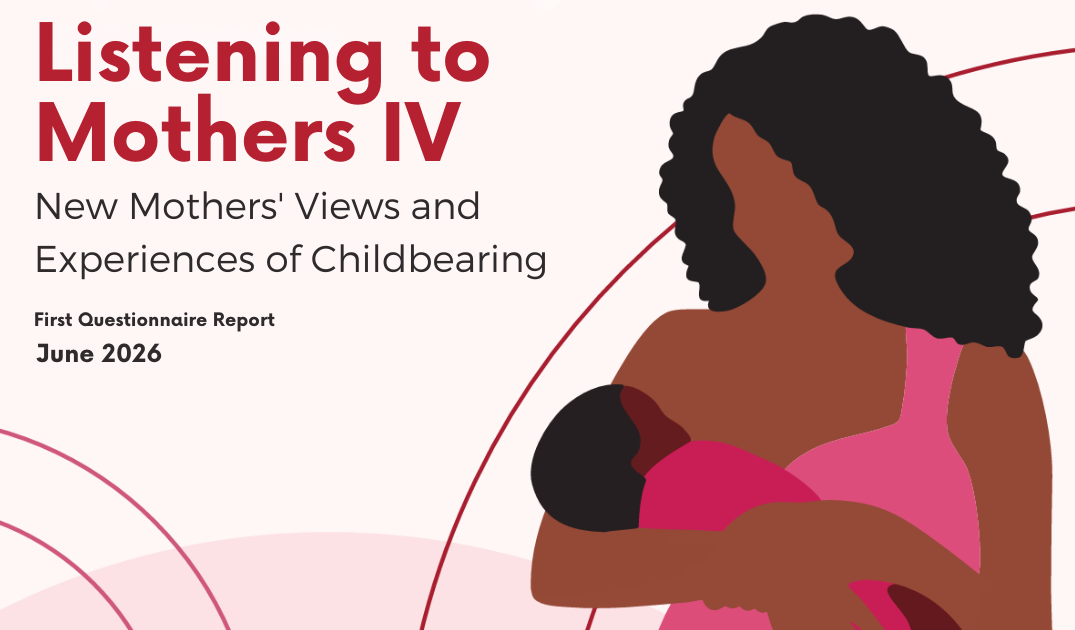
This month the National Partnership for Women & Families, working alongside the Black Mamas Matter Alliance and MomsRising, released the fourth Listening to Mothers survey. It is the most comprehensive study of its kind in a decade, built on the experiences of more than 3,800 mothers across all 50 states and the District of Columbia who gave birth between 2023 and 2025. What sets this work apart is simple but powerful. Instead of studying us, they asked us. They put the voices of mothers, especially Black, Indigenous, and other mothers of color, at the very center.
And what those mothers said deserves our full attention.
The data behind the dismissal
We talk a lot about respect. This survey measured it.
More than 40 percent of mothers said their providers did not respond in a timely way when they asked for help during their care. Nearly 1 in 5 said they were ignored or neglected. A formal measure of respectful, person-centered care during birth found that far too many women received less support than they needed, and the shortcomings were specific and familiar. Not feeling heard or valued. Being treated disrespectfully. Being kept in the dark about what was happening to their own bodies. Experiencing discrimination. Having their culture and customs brushed aside.
One woman shared that she was treated, in her words, like she “had no feelings, no mind of my own because I was young and black.” Another wrote that she felt if she had “the right insurance, the right income, or the right color,” she would have been treated differently, or at least respected.
This is the part we cannot let slip past us. The survey found the same painful pattern again and again. American Indian and Alaska Native mothers, Native Hawaiian and Pacific Islander mothers, Black mothers, and multiracial mothers often fared worse than everyone else. So did mothers on Medicaid, younger mothers, mothers with disabilities, and mothers without a partner. The disrespect was not random. It tracked along the same lines it always has.
When the care we want is out of reach
Here is what makes the dismissal cut even deeper. Mothers told the researchers exactly what good care looks like, and then described how rarely they got it.
Midwives stood out in the data, again and again, for the quality of care they provided. Yet only a small share of women had one. The great majority had no doula at all, even though the mothers who did have that support described it as life changing. As one put it, her doula was “like a birth coach, a therapist, and a friend all rolled into one.” Another wished aloud that insurance would cover doulas for women laboring alone, because going through it by herself was, in her word, lonely.
Too many women could not get an early prenatal visit when they wanted one, during the very window when questions run high and good guidance matters most. One mother did not have a single prenatal visit until a week before she delivered, because of insurance problems. Group prenatal care, virtual visits, and other models that mothers actually preferred remained rare.
And on the other side of that coin, many women received too much of the kind of care that works against the body rather than with it. Only a tiny fraction experienced what the report calls physiologic birth, the natural process unfolding without unnecessary interference. Most births were scheduled and managed, with inductions and cesareans set in motion before a woman’s body signaled it was ready. One mother described being the fifth cesarean performed by a single doctor in 24 hours. Another said she believed a doctor told her she needed a C-section that she did not need, simply to finish faster.
Decisions were made without consent. Women who wanted to move during labor were told to stay put. Women who wanted to try for a vaginal birth after a prior cesarean were denied the option. Women who had every reason to plan for a healthy vaginal delivery were pushed toward inductions based on predictions of a “big baby” that turned out to be perfectly average in size.
The pain we carry quietly
The survey also named something our community has lived with in silence for generations. The toll on our mental health.
Between 35 and 43 percent of mothers reported symptoms of anxiety before, during, and after pregnancy. Rates of both anxiety and depression were high at every stage, and they were highest among Native and Black mothers. Most of these women received no treatment at all, no counseling and no medication, because of cost and a shortage of providers who could help.
Read that again. A mother is caring for a newborn, running on no sleep, and quietly drowning, and the system offers her nothing. One woman wrote, “I was so depressed I was almost catatonic. I told my doctors and baby’s doctor but received no help.” Another said, “I felt like my feelings and concerns were ignored and felt very alone.”
Alone. That word shows up over and over in these pages. It should break our hearts, and it should move our feet.
This is happening at the worst possible moment
All of this is unfolding just as the supports families count on are being pulled away. Deep cuts to Medicaid are speeding the closure of hospitals and labor and delivery units, especially in rural communities. Restrictions on reproductive care are interfering with emergency treatment and worsening the shortage of providers willing and able to do this work. The very programs built to bring maternal deaths down are being scaled back.
We have made hard-won progress. Nearly every state has extended Medicaid coverage to a full year after birth. There is a national maternal mental health hotline now. There has been real investment in community-based doula support and maternal health innovation. Those gains are exactly what is at risk. And we know who pays first and pays most when the safety net frays. We always have.
What we do with this
It would be easy to read a report like this and feel defeated. Do not give that to them. Because buried in all this hard truth is a roadmap.
Mothers told us what they need. Midwives and doulas, available and covered, not reserved for the few. Prenatal care that starts early and treats us like partners. Mental health support that actually shows up. Providers who ask before they act, who explain before they cut, who believe us when we speak. None of this is a mystery. As one of the researchers said, the people closest to the problem are closest to the solution. The evidence is here. The expertise is here. What is missing is the will.
At the Black Women’s Health Imperative, this is the work we were born to do. For more than 40 years we have insisted that our health is our power and that our voices belong at the center of every decision made about our bodies. This survey is proof of what happens when somebody finally hands us the microphone. Now we have to make sure the people in charge keep listening, and act.
So here is what we are asking of you. Read the report. Share it with the women in your circle. If you are pregnant or planning to be, learn what respectful care looks like so you can name it when you do not get it. Ask about midwives and doulas. Write down your wishes. Bring someone with you who will advocate when you are too tired to fight. And know, deep in your bones, that being heard is not a favor anyone is doing for you. It is your right.
They heard us this time. Our job now is to make sure they never get to say they did not know.
Read the full Listening to Mothers survey at the National Partnership for Women & Families HERE.