She Was Recovering From One Surgery When She Found Out She Had Cancer
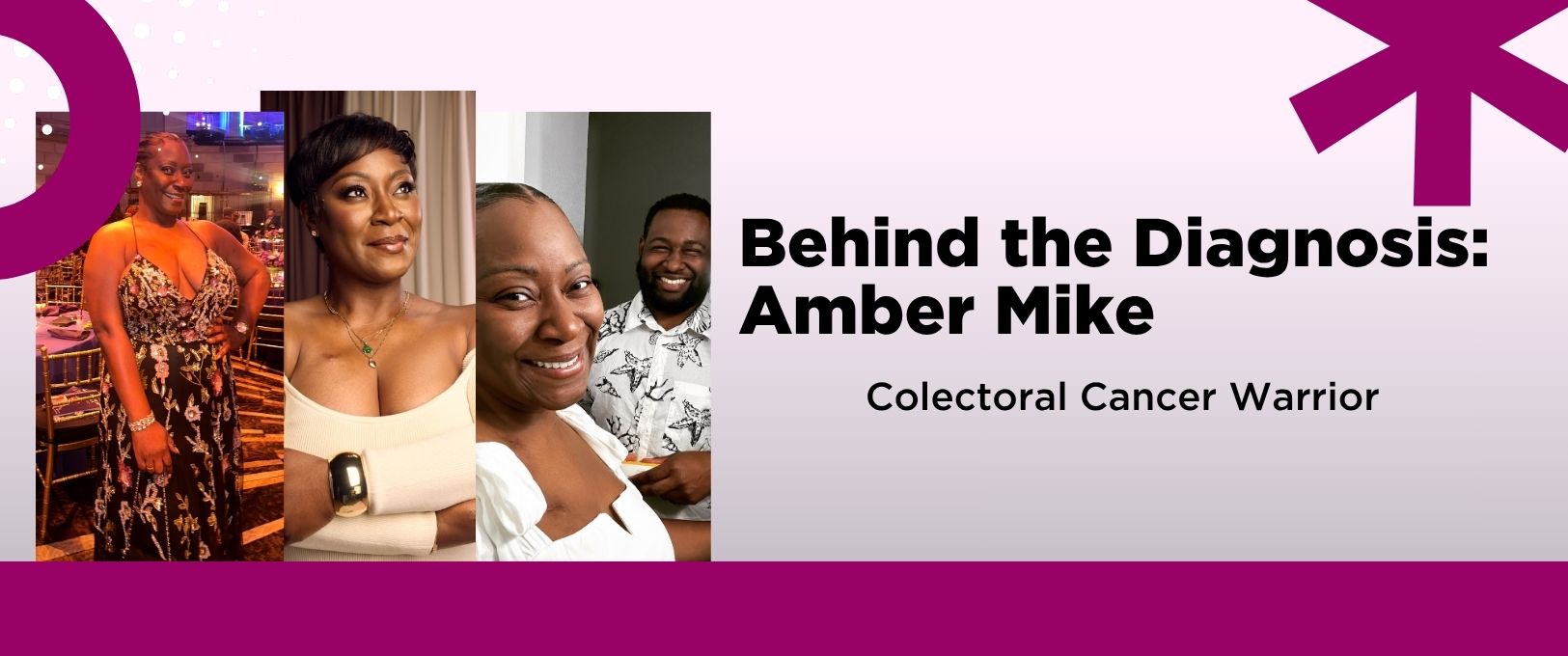
Amber Mike thought the worst was behind her. Then a colonoscopy changed everything.
| WATCH: Amber Mike at Essence Fest — Behind the Diagnosis Full Interview HERE |
When Amber Mike went in for a myomectomy, she was thinking about recovery, rest, and getting back to her life. What she wasn’t thinking about was cancer. But a month after her procedure, an unexpected symptom sent her down a path that would change everything. What followed was 12 rounds of chemotherapy, 3 rounds of radiation, and 2 major surgeries — and a lesson in surrender that this systems-thinker didn’t see coming.
|
3rd Leading cause of cancer death overall in the U.S.1 |
20% More likely: Black Americans to develop colorectal cancer vs. non-Hispanic white Americans2 |
45 Recommended age to begin regular colorectal cancer screening3 |
How did you first find out you had colorectal cancer?
Like many women, Amber had fibroids and made the decision to undergo a myomectomy. About a month into her recovery, she noticed blood when she used the restroom. Her gynecologist confirmed it wasn’t related to the surgery and recommended a colonoscopy. That referral became the moment everything shifted.
“I had a very demanding life. I was a single mother, working on multiple projects. Fatigue, shortness of breath, and an occasional stomachache were all things I’d learned to live with.”
— Amber Mike
Were there early warning signs you wish you’d caught sooner?
Looking back, there were signs. Fatigue. Shortness of breath. Occasional stomach pain. But none of them felt alarming. As a single mother juggling multiple projects, Amber had normalized what her body was telling her. She’d learned to push through. That’s a story far too many Black women know well.
What was treatment actually like?
Amber is a linear thinker. By profession, she creates systems. So when treatment began, she built a mental timeline and expected to follow it step by step. Treatment had other plans. Between 12 rounds of chemo, 2 minor surgeries, 1 major surgery, 3 rounds of radiation, an unexpected hospitalization, and side effects she never saw coming, she had to learn something new: fluidity. Surrender. Trusting the process even when the process didn’t cooperate.
Who held you down during the journey?
Amber has what she calls an amazing “framily” — friends who feel like family. Weekly calls, text threads, meal services, and gift boxes. Friends who called just to make her laugh. But the person who showed up most? Her son. At just 22 years old, he put his own life on hold to make sure his mother had everything she needed. She calls him her biggest hero.
“Find something to be excited about after treatment is over. Dreaming of the day when you’re better gives you hope and the fuel to navigate those tough moments.”
— Amber Mike
What would you tell someone newly diagnosed?
Set big, tangible goals. Amber’s friend Laila Odom, known from BET’s Zatima, challenged her to envision life after treatment. It was hard to think about the future when so much was uncertain, but that vision became her fuel. Her personal goal: the next time Beyoncé toured, she would be there. She was in complete isolation during the Renaissance tour. So this past summer, she and her sisters flew to London for Cowboy Carter — exactly two years after her first round of chemo.
How has surviving changed the way you live?
Amber’s life has always been about go. Motion. She never stopped, never slowed down, never made space for rest. That’s changed. Now, rest isn’t a reward — it’s a requirement. And she wants every woman reading this to know: it shouldn’t take a life-threatening diagnosis to give yourself permission to pause.
| Don’t wait for symptoms to speak louder.
If you’re 45 or older — or have a family history of colorectal cancer — talk to your doctor about screening. Early detection saves lives. Learn more at the Colorectal Cancer Alliance |
SOURCES
1 American Cancer Society. Colorectal Cancer Facts & Figures 2026. Atlanta: American Cancer Society, Inc. cancer.org/research/cancer-facts-statistics/colorectal-cancer-facts-figures.html
2 American Cancer Society. Colorectal Cancer Rates Higher in African Americans, Rising in Younger People. cancer.org/cancer/latest-news/colorectal-cancer-rates-higher-in-african-americans-rising-in-younger-people.html
3 American Cancer Society. Cancer Statistics, 2024. CA: A Cancer Journal for Clinicians, 74(1):12–49. doi:10.3322/caac.21820